logo
Products
PRODUCTS DETAILS
Home > Products >
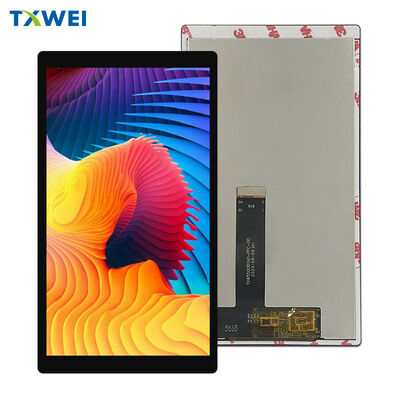
5.5-inch IPS full view display MIPI LCD screen 1080*1920 capacitive touch screen LCD display screen

5.5-inch IPS full view display MIPI LCD screen 1080*1920 capacitive touch screen LCD display screen

MOQ: 1
Standard Packaging: cardboard
Delivery Period: 16
Supply Capacity: 10000pcs
Detail Information
Place of Origin
Guangdong,China
Brand Name
TXWEI
Certification
CE ROHS FCC
Model Number
TXW550076N0-CTP
LCD Type:
Normally Black
Pixel Pitch (W*H):
0.06345
Size:
5.5
Active Area:
68.04(H) * 120.96(V)
Number Of Pixels:
1080*3RGB(H)X1920(V)
Viewing Direction:
ALL O’CLOCK
Lumens Degrees:
700cd/m²
Highlight:

5.5-inch IPS LCD display screen

,

MIPI LCD touch screen 1080x1920

,

capacitive touch screen TFT display

Product Description

TXW550076N0-CTP

5.5" FHD IPS Display + Projected Capacitive Touch

Full HD clarity. Industrial touch precision. Ready to integrate.

Visual Performance

1080 × 1920 Full HD resolution — 400 PPI pixel density pushes past the visibility threshold of the human eye at normal viewing distances. Individual pixels disappear. Text renders razor-sharp. Icons stay crisp even when scaled down.
IPS technology eliminates viewing angle compromise. Read the display from above, below, or extreme side angles without color inversion or contrast collapse. Critical for handheld devices that tilt and rotate during actual use.
16.7 million colors via software-selectable depth. Smooth gradients in medical imaging. Accurate brand colors in consumer interfaces. Subtle shadow detail in industrial visualization.
Active area: 68.53 mm × 121.82 mm
Pixel geometry: RGB stripe, 0.06345 mm pitch
Display mode: Normally Black — deep blacks, high contrast ratio

Touch Interface: Projected Capacitive

10-point multi-touch recognition. Pinch to zoom. Two-handed operation. Complex gesture inputs. The controller tracks simultaneous contact points without confusion or ghosting.
I2C communication to host processor. CTP_SDA and CTP_SCL lines carry touch coordinate data at standard bus speeds. No dedicated USB controller required. No driver installation headaches on embedded Linux or Android builds.
Hardware reset control via CTP_RST pin. Force recalibration after power events. Recover from electrostatic discharge events without full system reboot.
Interrupt-driven architecture via CTP_INT pin. Touch events trigger immediate host notification. No polling overhead. Lower CPU utilization. Faster response to user input.
Cover glass surface hardness: 6H minimum — resists scratches from keys, tools, and industrial debris. Surface treatment maintains glide feel across product lifetime.

Signal Architecture: MIPI DSI

Modern embedded systems run on MIPI. This module speaks natively.
Four data lanes: D0N/D0P through D3N/D3P carry high-speed differential pixel data. Burst transmission at up to 1 Gbps per lane. Enough bandwidth for 120 Hz refresh at Full HD resolution with headroom for overhead.
Dedicated clock pair: CLKN/CLKP provides clean timing reference. Source-synchronous architecture eliminates skew concerns across PCB traces.
Low-power state support. LP-11, LP-00, and LP-10 states for idle periods. Reduce power consumption when display content static. Extend battery life in portable applications.
Tearing effect synchronization via TE pin. Frame-locked updates eliminate visual tearing in video playback and camera viewfinder applications. Essential for professional imaging and real-time control interfaces.

Power System

Dual analog rails: VSP at +5.7V (range +4.8V to +6.0V) and VSN at -5.7V (range -6.0V to -4.8V) supply the TFT source driver and gamma reference circuits. External regulation required — on-module DC-DC conversion not implemented.
I/O voltage: 1.8V nominal (1.8V to 3.3V tolerant) for MIPI logic levels. Direct interface to modern application processors without level translation.
Backlight power: 18 white LEDs in series configuration. Forward voltage 16.8V to 19.2V at 60mA typical. PWM dimming control via dedicated PWM pin. 0% to 100% brightness range without color temperature shift.
Power sequencing mandatory. VDD1 stable before VSP and VSN. 10ms minimum delay between rail enables. 12ms VSN stabilization before RESX release. Violation risks latch-up or incomplete initialization.

Illumination Engineering

Edge-lit LED architecture with 18 emitters. Light injected from module edge, distributed across 5.5 inch diagonal via precision light guide plate. No hot spots. No edge dimming. Uniform luminance from corner to corner.
700 cd/m² typical brightness with LCD and CTP stack. Readable under office lighting. Viable in shaded outdoor conditions. PWM dimming scales down to dark room compatibility without minimum brightness floor.
30,000 hour LED lifetime to 50% initial output at 20mA per emitter. Derate to 60mA maximum for thermal management. Conservative drive current extends service interval. Reduced maintenance for always-on industrial applications.
85% minimum uniformity across active area. Measured at 9-point grid per industry standard. No visible banding or gradient in solid color fields.

Mechanical Integration

LCD module envelope: 70.53 mm × 127.28 mm × 1.68 mm
LCD + CTP combined stack: 72.52 mm × 132.90 mm × 2.56 mm
The 2.56 mm total thickness includes display, touch sensor, cover glass, and all lamination layers. No external controller boards. No separate touch overlay to align during assembly.
FPC tail extends from short edge with 40-pin 0.5mm pitch connector. Bend radius specified for folding into compact housings. Route through hinge mechanisms. Thread through narrow chassis channels.
Cover glass overhang beyond LCD active area provides sealing surface for gasket integration. IP54 and IP65 enclosure ratings achievable with proper mechanical design.

Driver Architecture: HX83112-A

1080-channel source driver — one output per RGB subpixel column
1920-channel gate driver — one output per horizontal scan line
On-chip gamma correction — 64-step programmable per color channel. Calibrate for panel-to-panel variation. Match multiple displays in tiled configurations.
Internal grayscale voltage generation from VSP/VSN inputs. No external resistor ladders. No precision voltage references required.
Sleep mode support. Deep standby current consumption below self-discharge rate of typical Li-ion cells. Sub-5ms wake to full image. 120ms wake from software reset with full register reload.
EEPROM storage of factory calibration data. VCOM setting. Gamma curves. Power-on defaults loaded automatically. Zero host configuration required for basic operation.

Timing and Control Protocol

Vertical timing parameters
Total frame period: 2520 lines typical
Visible lines: 1920 active
Front porch: 32 lines minimum (touch controller dependent)
Back porch: Programmable to match panel requirements
Refresh rate: 120 Hz maximum at reduced resolution, 60 Hz at Full HD
Horizontal timing parameters
Line period scales with PCLK frequency
Data valid window centered in line period
Blanking intervals carry DSI packet overhead and command embedding
Software reset sequence: 01h command initiates register reload. 5ms delay before subsequent commands. 120ms delay before Sleep Out if reset issued during active display. Host must continue PCLK/HSYNC/VSYNC/DE for two complete frames after reset command.

Environmental Qualification

Operating temperature: -20°C to +60°C with touch functional
Storage temperature: -30°C to +70°C unpowered
Humidity range: 20% to 90% RH non-condensing
Cold start capability confirmed at -20°C. Liquid crystal viscosity remains within operational envelope. No temporary image sticking or response time degradation at temperature extremes.
Reliability test matrix:
High temperature storage — 96 hours at +70°C
Low temperature storage — 96 hours at -30°C
High temperature operation — 96 hours at +60°C powered
Low temperature operation — 96 hours at -20°C powered
Humidity storage — 96 hours at 50°C / 90%RH
Thermal shock — 10 cycles, -20°C to +60°C, 30 minute dwells
Zero functional failures. Zero missing pixels. Zero liquid crystal leakage. No seal degradation. No touch sensitivity drift beyond specification.

Integration Support

Evaluation kit available — driver board with HDMI-to-MIPI bridge, touch controller breakout, and adjustable power supply. Validate timing, test touch response, measure power consumption without custom hardware development.
Mechanical samples — non-functional units with identical dimensions, weight, and connector placement. Verify fit in production housings. Build assembly fixtures. Develop cable routing before display procurement.
Optical measurement reports — luminance, uniformity, color gamut, and contrast ratio traceable to NIST-standards instrumentation. Included with sample shipments. Updated per production lot on request.
Application engineering access — direct consultation with display specialists for power sequencing review, EMI mitigation, touch tuning, and custom cover glass specifications.
Products
PRODUCTS DETAILS
5.5-inch IPS full view display MIPI LCD screen 1080*1920 capacitive touch screen LCD display screen
MOQ: 1
Standard Packaging: cardboard
Delivery Period: 16
Supply Capacity: 10000pcs
Detail Information
Place of Origin
Guangdong,China
Brand Name
TXWEI
Certification
CE ROHS FCC
Model Number
TXW550076N0-CTP
LCD Type:
Normally Black
Pixel Pitch (W*H):
0.06345
Size:
5.5
Active Area:
68.04(H) * 120.96(V)
Number Of Pixels:
1080*3RGB(H)X1920(V)
Viewing Direction:
ALL O’CLOCK
Lumens Degrees:
700cd/m²
Minimum Order Quantity:
1
Packaging Details:
cardboard
Delivery Time:
16
Supply Ability:
10000pcs
Highlight

5.5-inch IPS LCD display screen

,

MIPI LCD touch screen 1080x1920

,

capacitive touch screen TFT display

Product Description

TXW550076N0-CTP

5.5" FHD IPS Display + Projected Capacitive Touch

Full HD clarity. Industrial touch precision. Ready to integrate.

Visual Performance

1080 × 1920 Full HD resolution — 400 PPI pixel density pushes past the visibility threshold of the human eye at normal viewing distances. Individual pixels disappear. Text renders razor-sharp. Icons stay crisp even when scaled down.
IPS technology eliminates viewing angle compromise. Read the display from above, below, or extreme side angles without color inversion or contrast collapse. Critical for handheld devices that tilt and rotate during actual use.
16.7 million colors via software-selectable depth. Smooth gradients in medical imaging. Accurate brand colors in consumer interfaces. Subtle shadow detail in industrial visualization.
Active area: 68.53 mm × 121.82 mm
Pixel geometry: RGB stripe, 0.06345 mm pitch
Display mode: Normally Black — deep blacks, high contrast ratio

Touch Interface: Projected Capacitive

10-point multi-touch recognition. Pinch to zoom. Two-handed operation. Complex gesture inputs. The controller tracks simultaneous contact points without confusion or ghosting.
I2C communication to host processor. CTP_SDA and CTP_SCL lines carry touch coordinate data at standard bus speeds. No dedicated USB controller required. No driver installation headaches on embedded Linux or Android builds.
Hardware reset control via CTP_RST pin. Force recalibration after power events. Recover from electrostatic discharge events without full system reboot.
Interrupt-driven architecture via CTP_INT pin. Touch events trigger immediate host notification. No polling overhead. Lower CPU utilization. Faster response to user input.
Cover glass surface hardness: 6H minimum — resists scratches from keys, tools, and industrial debris. Surface treatment maintains glide feel across product lifetime.

Signal Architecture: MIPI DSI

Modern embedded systems run on MIPI. This module speaks natively.
Four data lanes: D0N/D0P through D3N/D3P carry high-speed differential pixel data. Burst transmission at up to 1 Gbps per lane. Enough bandwidth for 120 Hz refresh at Full HD resolution with headroom for overhead.
Dedicated clock pair: CLKN/CLKP provides clean timing reference. Source-synchronous architecture eliminates skew concerns across PCB traces.
Low-power state support. LP-11, LP-00, and LP-10 states for idle periods. Reduce power consumption when display content static. Extend battery life in portable applications.
Tearing effect synchronization via TE pin. Frame-locked updates eliminate visual tearing in video playback and camera viewfinder applications. Essential for professional imaging and real-time control interfaces.

Power System

Dual analog rails: VSP at +5.7V (range +4.8V to +6.0V) and VSN at -5.7V (range -6.0V to -4.8V) supply the TFT source driver and gamma reference circuits. External regulation required — on-module DC-DC conversion not implemented.
I/O voltage: 1.8V nominal (1.8V to 3.3V tolerant) for MIPI logic levels. Direct interface to modern application processors without level translation.
Backlight power: 18 white LEDs in series configuration. Forward voltage 16.8V to 19.2V at 60mA typical. PWM dimming control via dedicated PWM pin. 0% to 100% brightness range without color temperature shift.
Power sequencing mandatory. VDD1 stable before VSP and VSN. 10ms minimum delay between rail enables. 12ms VSN stabilization before RESX release. Violation risks latch-up or incomplete initialization.

Illumination Engineering

Edge-lit LED architecture with 18 emitters. Light injected from module edge, distributed across 5.5 inch diagonal via precision light guide plate. No hot spots. No edge dimming. Uniform luminance from corner to corner.
700 cd/m² typical brightness with LCD and CTP stack. Readable under office lighting. Viable in shaded outdoor conditions. PWM dimming scales down to dark room compatibility without minimum brightness floor.
30,000 hour LED lifetime to 50% initial output at 20mA per emitter. Derate to 60mA maximum for thermal management. Conservative drive current extends service interval. Reduced maintenance for always-on industrial applications.
85% minimum uniformity across active area. Measured at 9-point grid per industry standard. No visible banding or gradient in solid color fields.

Mechanical Integration

LCD module envelope: 70.53 mm × 127.28 mm × 1.68 mm
LCD + CTP combined stack: 72.52 mm × 132.90 mm × 2.56 mm
The 2.56 mm total thickness includes display, touch sensor, cover glass, and all lamination layers. No external controller boards. No separate touch overlay to align during assembly.
FPC tail extends from short edge with 40-pin 0.5mm pitch connector. Bend radius specified for folding into compact housings. Route through hinge mechanisms. Thread through narrow chassis channels.
Cover glass overhang beyond LCD active area provides sealing surface for gasket integration. IP54 and IP65 enclosure ratings achievable with proper mechanical design.

Driver Architecture: HX83112-A

1080-channel source driver — one output per RGB subpixel column
1920-channel gate driver — one output per horizontal scan line
On-chip gamma correction — 64-step programmable per color channel. Calibrate for panel-to-panel variation. Match multiple displays in tiled configurations.
Internal grayscale voltage generation from VSP/VSN inputs. No external resistor ladders. No precision voltage references required.
Sleep mode support. Deep standby current consumption below self-discharge rate of typical Li-ion cells. Sub-5ms wake to full image. 120ms wake from software reset with full register reload.
EEPROM storage of factory calibration data. VCOM setting. Gamma curves. Power-on defaults loaded automatically. Zero host configuration required for basic operation.

Timing and Control Protocol

Vertical timing parameters
Total frame period: 2520 lines typical
Visible lines: 1920 active
Front porch: 32 lines minimum (touch controller dependent)
Back porch: Programmable to match panel requirements
Refresh rate: 120 Hz maximum at reduced resolution, 60 Hz at Full HD
Horizontal timing parameters
Line period scales with PCLK frequency
Data valid window centered in line period
Blanking intervals carry DSI packet overhead and command embedding
Software reset sequence: 01h command initiates register reload. 5ms delay before subsequent commands. 120ms delay before Sleep Out if reset issued during active display. Host must continue PCLK/HSYNC/VSYNC/DE for two complete frames after reset command.

Environmental Qualification

Operating temperature: -20°C to +60°C with touch functional
Storage temperature: -30°C to +70°C unpowered
Humidity range: 20% to 90% RH non-condensing
Cold start capability confirmed at -20°C. Liquid crystal viscosity remains within operational envelope. No temporary image sticking or response time degradation at temperature extremes.
Reliability test matrix:
High temperature storage — 96 hours at +70°C
Low temperature storage — 96 hours at -30°C
High temperature operation — 96 hours at +60°C powered
Low temperature operation — 96 hours at -20°C powered
Humidity storage — 96 hours at 50°C / 90%RH
Thermal shock — 10 cycles, -20°C to +60°C, 30 minute dwells
Zero functional failures. Zero missing pixels. Zero liquid crystal leakage. No seal degradation. No touch sensitivity drift beyond specification.

Integration Support

Evaluation kit available — driver board with HDMI-to-MIPI bridge, touch controller breakout, and adjustable power supply. Validate timing, test touch response, measure power consumption without custom hardware development.
Mechanical samples — non-functional units with identical dimensions, weight, and connector placement. Verify fit in production housings. Build assembly fixtures. Develop cable routing before display procurement.
Optical measurement reports — luminance, uniformity, color gamut, and contrast ratio traceable to NIST-standards instrumentation. Included with sample shipments. Updated per production lot on request.
Application engineering access — direct consultation with display specialists for power sequencing review, EMI mitigation, touch tuning, and custom cover glass specifications.
Sitemap |  Privacy Policy | China Good Quality TFT LCD Display Supplier. Copyright © 2024-2026 Shenzhen Tianxianwei Technology Co., Ltd. . All Rights Reserved.