logo
Products
PRODUCTS DETAILS
Home > Products >
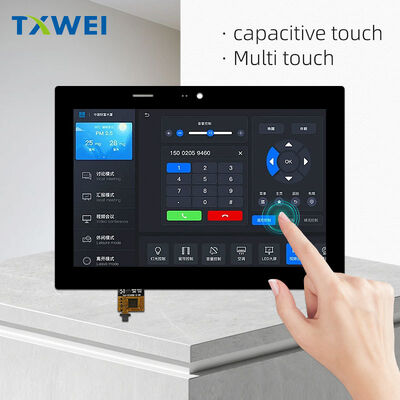
8-inch capacitive touch screen LCD screen MIPI interface 1200 * 1920 security display plant light control display module

8-inch capacitive touch screen LCD screen MIPI interface 1200 * 1920 security display plant light control display module

MOQ: 1
Price: negotiation
Delivery Period: 7-16days
Payment Method: L/C,D/A,D/P,T/T
Supply Capacity: 10000pcs
Detail Information
Place of Origin
shenzhen
Brand Name
TXWEI
Certification
CE FCC ROHS
Model Number
TXW800042B0-YLT
Number Of Pixels:
1200*1920
Viewing Direction:
IPS
Display Interface:
MIPI 4 LANE
Brightness:
500 Nits
Active Area:
107.64*172.22
Outline Size:
137.61*197.06*4.5mm
Operating Temperature:
-10+60℃
Storage Temperature:
-20+70℃
Number Of Pins:
31pin
Touch Technology:
G+G
Touch Interface:
IIC
Touch IC:
GT1151QM
Highlight:

8-inch capacitive touch LCD screen

,

MIPI interface security display module

,

TFT LCD plant light control display

Product Description

TXW800042B0-YLT

8.0" WQXGA+ TFT LCD with Integrated CTP

1200 × 1920 · 4-Lane MIPI · 500cd/m² · 2.80mm LCM · G+G Capacitive Touch · All-Direction ViewingProduct Philosophy
The TXW800042B0-YLT represents a fundamental rethinking of what a display module can be. It is not merely a screen with a touch panel attached. It is a unified optoelectronic system — display, touch, and illumination engineered as a single coherent entity.
This module addresses a specific design tension in modern portable electronics: the conflict between increasing pixel density and decreasing physical thickness. At 2.80mm for the LCM alone and 4.85mm total with touch integration, it achieves a form factor that would have been impractical five years ago, while delivering 2.3 million individually addressable pixels across a portrait-oriented 8.0-inch diagonal.

Display Architecture

Pixel Matrix

The active matrix employs 1200 columns and 1920 rows of thin-film transistors, each controlling an RGB vertical stripe subpixel triad. The 0.0299mm horizontal by 0.0897mm vertical pitch yields a pixel density sufficient for typographic refinement at typical handheld viewing distances — approximately 40 to 60 centimeters — without the computational and power penalties of 4K-class resolutions.
The 107.64mm × 172.22mm active area occupies a 10:16 aspect ratio. This orientation prioritizes vertical information density, a decision that reflects the module's intended deployment in document-centric applications, scrolling interfaces, and portrait-mode instrumentation where height conveys information hierarchy.

Optical Mode

Normally Black transmissive operation provides two distinct advantages. First, the unpowered state presents a deep, light-absorbing surface — functionally a neutral density filter — which reduces perceived power consumption during idle states and improves contrast under ambient illumination. Second, the voltage-dependent optical rotation of the liquid crystal layer produces a gamma response that aligns more closely with human luminance perception than Normally White alternatives, particularly in the critical shadow region below 20% digital drive.

Viewing Characteristics

All O'Clock viewing technology eliminates the directional asymmetry that constrains conventional TFT designs. The optical stack — polarizer, retardation films, liquid crystal layer, and second polarizer — is engineered such that the cone of acceptable contrast extends uniformly across 360 degrees of azimuth. This is achieved through controlled pretilt angle distribution and dual-domain or multi-domain liquid crystal alignment, rather than simple compensation film stacking.
The practical consequence: a device mounted in a shared viewing environment — medical cart, industrial panel, or gaming handheld — presents identical color and contrast regardless of observer position. No color inversion. No gamma shift. No luminance collapse at oblique angles.

Touch Integration

Structural Design

The capacitive touch panel employs a G+G (Glass + Glass) architecture: a 1.1mm Panda glass cover lens, 0.20mm SCA optical bonding layer, 0.55mm sensor glass with patterned ITO or metal mesh electrodes, and a second 0.20mm SCA layer laminating to the display surface. Total touch stack thickness: 1.85mm ± 0.15mm, excluding auxiliary materials.
This construction prioritizes durability and optical clarity over absolute thinness. The 1.1mm cover glass provides ≥7H surface hardness under 750g load — sufficient to resist key scratches, stylus pressure, and incidental abrasion in field environments. The SCA (Solid Clear Adhesive) layers eliminate the air gaps that cause Fresnel reflections and parallax error in gasket-bonded alternatives.

Sensor Characteristics

The GT1151QM controller supports five-point simultaneous tracking with glove and wet-hand operation modes. These are not marketing features but engineering necessities: medical personnel operate devices with latex or nitrile gloves; industrial operators work with moist or contaminated hands; outdoor users encounter rain and condensation.
The controller communicates via I2C at 1.8V logic levels, with separate 2.8V analog power. Interrupt-driven reporting (CTP_INT pin) eliminates polling overhead on the host processor, reducing system power consumption and improving touch latency. A dedicated reset line (CTP_RST) enables controller recovery without full system reboot.

Optical Integration

The touch panel includes an IR black semi-transparent filter region with specific spectral characteristics: 5–15% transmission at 550nm visible wavelength, >80% transmission at 850nm infrared. This enables proximity sensing or ambient light detection behind the cover glass without compromising display aesthetics — the sensor area appears as uniform black to the user while remaining transparent to IR emitters and detectors.

Interface Design

MIPI DSI Implementation

The 4-lane MIPI DSI interface represents a deliberate departure from legacy parallel RGB and LVDS standards. Each data lane operates as a fully differential pair — D0P/D0N through D3P/D3N — with a dedicated clock pair CLKP/CLKN. This architecture provides inherent common-mode noise rejection, enabling reliable operation in electromagnetically hostile environments: near cellular transceivers, switching power supplies, and motor drives.
The serial protocol reduces pin count to 31 total — including power, ground, and backlight — compared to 40+ for parallel alternatives. This reduction translates directly to smaller connectors, simpler PCB routing, and reduced flex cable bulk. For portable devices where every milligram and cubic millimeter carries design cost, these savings are non-trivial.

Pin Organization

The 31-pin FPC groups functionally related signals with alternating ground returns:
  • Pins 1–3: LEDA (backlight anode, triple redundant)
  • Pins 5–8: LEDK (backlight cathode, quadruple return)
  • Pins 11–12: D2P/D2N (MIPI data lane 2)
  • Pins 14–15: D1P/D1N (MIPI data lane 1)
  • Pins 17–18: CLKP/CLKN (MIPI clock)
  • Pins 20–21: D0P/D0N (MIPI data lane 0)
  • Pins 23–24: D3P/D3N (MIPI data lane 3)
Ground pins at 9, 10, 13, 16, 19, 22, 25, 28 provide return paths and shielding between high-speed differential pairs. The NC pins (4, 26) reserve positions for future interface expansion or test access.

Power Architecture

Voltage Rails

The module requires three distinct supply domains:
IOVCC (1.65V – 3.3V): I/O logic supply with wide compatibility. The 1.65V minimum enables direct interface to modern low-voltage SoCs; the 3.3V maximum accommodates legacy 3.3V logic families without level translation.
VDD (2.8V – 3.3V): Core DC/DC converter input. The internal charge pump generates all TFT-specific voltages from this single rail — VGH (~18V, gate ON), VGL (~-8V, gate OFF), VSP/VSN (analog reference), and VCOM (common electrode).
CTP_VDD (2.8V): Dedicated touch controller analog supply, isolated from display power to prevent switching noise coupling into capacitive sensing channels.

Sequencing Requirements

The HX8279D driver IC enforces strict power-on sequencing to prevent latch-up and ensure reliable initialization:
  1. VDD rises to operational threshold
  2. RESETB asserts low for minimum specified duration
  3. VGL generates before VGH (Schottky diode protection between VGL and GND prevents parasitic SCR activation when VDD and VSP start simultaneously)
  4. VGH ramps after VGL stabilization
  5. MIPI interface enters High-Speed mode, receiving initialization codes
  6. GOA MUX and timing registers written within 50ms of reset release
  7. Display output enables, presenting first frame with factory-default gamma
Power-off sequencing reverses this order, with STBYB assertion triggering controlled shutdown. The internal state machine manages rail sequencing autonomously, reducing external power management complexity.

Illumination System

LED Array

Twenty-seven white LEDs in edge-lighting configuration provide uniform backlighting across the 107.64mm × 172.22mm active area. The array operates at 8.4V–9.6V forward voltage with 225mA typical current, yielding 500 cd/m² luminance through the display and touch stack.
The edge-lighting approach — LEDs positioned along one or more panel edges, with light guided by a reflective cavity and extracted through a diffuser film — achieves the 2.80mm LCM thickness that direct backlighting cannot. The trade-off is absolute luminance: 500 cd/m² suffices for indoor and moderate outdoor use but requires enhancement for direct sunlight readability.

Lifetime Characteristics

LED lifetime is specified at 30,000 hours to 50% of initial brightness, measured at 32mA per LED. This metric reflects real-world degradation rather than catastrophic failure — the backlight dims gradually, providing visible indication of end-of-life rather than abrupt darkness.
The specification explicitly warns that operating current above 37mA per LED accelerates degradation. This transparency enables informed thermal and electrical design: implement proper current regulation, adequate heat sinking, and perhaps most importantly, user-adjustable brightness controls that default to moderate levels rather than maximum output.

Environmental Qualification

Six qualification tests validate environmental resilience:
High Temperature Storage (+70°C, 96 hours): Validates material stability and seal integrity under thermal stress without electrical operation. Post-test functional verification confirms no missing segments, shorted pixels, or display degradation.
Low Temperature Storage (-20°C, 96 hours): Ensures cold-start capability and material flexibility. Standard displays suffer liquid crystal viscosity increases and response time collapse at these temperatures; this module maintains operational readiness.
High Temperature Operating (+60°C, 96 hours): Full electrical operation at maximum rated temperature. The display must maintain all functional parameters without thermal runaway, color shift, or premature LED degradation. Liquid crystal leakage under operational thermal stress constitutes automatic failure.
Low Temperature Operating (-10°C, 96 hours): Verifies real-time performance in cold environments. Low-temperature bubbles — caused by differential thermal contraction between glass substrates and liquid crystal fill — are strictly prohibited. End seal loosening and frame rainbow effects are similarly disallowed.
High Temperature/Humidity Storage (50°C, 90%RH, 96 hours): Accelerates moisture ingress and corrosion mechanisms. The module must maintain seal integrity and electrical isolation in tropical or uncontrolled warehouse environments.
Thermal Shock Cycling (10 cycles, -10°C to +60°C, 30-minute dwells): Exposes coefficient-of-thermal-expansion mismatches between glass, metal, polymer, and adhesive materials. Frame rainbow effects and seal failures are automatic rejection criteria.

Mechanical Integration

Module Dimensions

The LCM measures 114.60mm × 184.10mm × 2.80mm. With touch integration, total thickness increases to 4.85mm ± 0.2mm. The touch panel overhangs the display active area by approximately 0.4mm per side — 108.44mm × 173.02mm viewable area versus 107.64mm × 172.22mm display active area — accommodating lamination tolerances and ensuring complete touch coverage.

Cover Glass Features

The 1.1mm Panda glass cover lens includes:
  • AF (Anti-Fingerprint) coating: oleophobic surface treatment reducing smudge visibility and cleaning frequency
  • Black printed border: concealing adhesive lines, sensor traces, and edge discontinuities from user view
  • IR semi-transparent region: as described in touch integration section
  • Protective film: applied during manufacturing, removed by integrator before final assembly

FPC Design

The display FPC exits from the bottom edge with 0.50mm pitch, 31 positions, compatible with FH26-31S-0.3SHW(10) connector or equivalent. The touch FPC exits separately with 8 positions for I2C interface. Both FPCs include electromagnetic shielding film on both surfaces to prevent high-speed MIPI signals from coupling into capacitive touch sensing channels.
A steel reinforcement plate (0.2mm thickness) provides mechanical support and electrical grounding at the connector region. The CTP FPC includes a pull tab for protective film removal — a small detail that prevents adhesive residue and contamination during assembly.

Applications

Medical Instrumentation

The 16.7M color depth, stable gamma calibration from OTP, and glove-compatible touch meet requirements for patient monitors, portable ultrasound, and handheld diagnostic tools. The portrait orientation suits vital sign trending displays and longitudinal patient data review.

Industrial Human-Machine Interface

Wide temperature operation (-10°C to +60°C), robust EMI immunity via MIPI differential signaling, and 7H surface hardness address factory floor realities. The display maintains readability through protective cover glass in high-ambient-light conditions.

Portable Gaming and Entertainment

High pixel density and fast response time create immersive experiences. The slim profile enables ergonomic designs that don't fatigue hands during extended sessions. All-direction viewing supports multiplayer scenarios with shared devices.

Automotive Interior

Portrait orientation suits center console information displays and rear-seat entertainment. Wide temperature qualification addresses cabin thermal extremes from desert parking to arctic cold starts. MIPI compatibility simplifies integration with modern automotive infotainment processors.
Products
PRODUCTS DETAILS
8-inch capacitive touch screen LCD screen MIPI interface 1200 * 1920 security display plant light control display module
MOQ: 1
Price: negotiation
Delivery Period: 7-16days
Payment Method: L/C,D/A,D/P,T/T
Supply Capacity: 10000pcs
Detail Information
Place of Origin
shenzhen
Brand Name
TXWEI
Certification
CE FCC ROHS
Model Number
TXW800042B0-YLT
Number Of Pixels:
1200*1920
Viewing Direction:
IPS
Display Interface:
MIPI 4 LANE
Brightness:
500 Nits
Active Area:
107.64*172.22
Outline Size:
137.61*197.06*4.5mm
Operating Temperature:
-10+60℃
Storage Temperature:
-20+70℃
Number Of Pins:
31pin
Touch Technology:
G+G
Touch Interface:
IIC
Touch IC:
GT1151QM
Minimum Order Quantity:
1
Price:
negotiation
Delivery Time:
7-16days
Payment Terms:
L/C,D/A,D/P,T/T
Supply Ability:
10000pcs
Highlight

8-inch capacitive touch LCD screen

,

MIPI interface security display module

,

TFT LCD plant light control display

Product Description

TXW800042B0-YLT

8.0" WQXGA+ TFT LCD with Integrated CTP

1200 × 1920 · 4-Lane MIPI · 500cd/m² · 2.80mm LCM · G+G Capacitive Touch · All-Direction ViewingProduct Philosophy
The TXW800042B0-YLT represents a fundamental rethinking of what a display module can be. It is not merely a screen with a touch panel attached. It is a unified optoelectronic system — display, touch, and illumination engineered as a single coherent entity.
This module addresses a specific design tension in modern portable electronics: the conflict between increasing pixel density and decreasing physical thickness. At 2.80mm for the LCM alone and 4.85mm total with touch integration, it achieves a form factor that would have been impractical five years ago, while delivering 2.3 million individually addressable pixels across a portrait-oriented 8.0-inch diagonal.

Display Architecture

Pixel Matrix

The active matrix employs 1200 columns and 1920 rows of thin-film transistors, each controlling an RGB vertical stripe subpixel triad. The 0.0299mm horizontal by 0.0897mm vertical pitch yields a pixel density sufficient for typographic refinement at typical handheld viewing distances — approximately 40 to 60 centimeters — without the computational and power penalties of 4K-class resolutions.
The 107.64mm × 172.22mm active area occupies a 10:16 aspect ratio. This orientation prioritizes vertical information density, a decision that reflects the module's intended deployment in document-centric applications, scrolling interfaces, and portrait-mode instrumentation where height conveys information hierarchy.

Optical Mode

Normally Black transmissive operation provides two distinct advantages. First, the unpowered state presents a deep, light-absorbing surface — functionally a neutral density filter — which reduces perceived power consumption during idle states and improves contrast under ambient illumination. Second, the voltage-dependent optical rotation of the liquid crystal layer produces a gamma response that aligns more closely with human luminance perception than Normally White alternatives, particularly in the critical shadow region below 20% digital drive.

Viewing Characteristics

All O'Clock viewing technology eliminates the directional asymmetry that constrains conventional TFT designs. The optical stack — polarizer, retardation films, liquid crystal layer, and second polarizer — is engineered such that the cone of acceptable contrast extends uniformly across 360 degrees of azimuth. This is achieved through controlled pretilt angle distribution and dual-domain or multi-domain liquid crystal alignment, rather than simple compensation film stacking.
The practical consequence: a device mounted in a shared viewing environment — medical cart, industrial panel, or gaming handheld — presents identical color and contrast regardless of observer position. No color inversion. No gamma shift. No luminance collapse at oblique angles.

Touch Integration

Structural Design

The capacitive touch panel employs a G+G (Glass + Glass) architecture: a 1.1mm Panda glass cover lens, 0.20mm SCA optical bonding layer, 0.55mm sensor glass with patterned ITO or metal mesh electrodes, and a second 0.20mm SCA layer laminating to the display surface. Total touch stack thickness: 1.85mm ± 0.15mm, excluding auxiliary materials.
This construction prioritizes durability and optical clarity over absolute thinness. The 1.1mm cover glass provides ≥7H surface hardness under 750g load — sufficient to resist key scratches, stylus pressure, and incidental abrasion in field environments. The SCA (Solid Clear Adhesive) layers eliminate the air gaps that cause Fresnel reflections and parallax error in gasket-bonded alternatives.

Sensor Characteristics

The GT1151QM controller supports five-point simultaneous tracking with glove and wet-hand operation modes. These are not marketing features but engineering necessities: medical personnel operate devices with latex or nitrile gloves; industrial operators work with moist or contaminated hands; outdoor users encounter rain and condensation.
The controller communicates via I2C at 1.8V logic levels, with separate 2.8V analog power. Interrupt-driven reporting (CTP_INT pin) eliminates polling overhead on the host processor, reducing system power consumption and improving touch latency. A dedicated reset line (CTP_RST) enables controller recovery without full system reboot.

Optical Integration

The touch panel includes an IR black semi-transparent filter region with specific spectral characteristics: 5–15% transmission at 550nm visible wavelength, >80% transmission at 850nm infrared. This enables proximity sensing or ambient light detection behind the cover glass without compromising display aesthetics — the sensor area appears as uniform black to the user while remaining transparent to IR emitters and detectors.

Interface Design

MIPI DSI Implementation

The 4-lane MIPI DSI interface represents a deliberate departure from legacy parallel RGB and LVDS standards. Each data lane operates as a fully differential pair — D0P/D0N through D3P/D3N — with a dedicated clock pair CLKP/CLKN. This architecture provides inherent common-mode noise rejection, enabling reliable operation in electromagnetically hostile environments: near cellular transceivers, switching power supplies, and motor drives.
The serial protocol reduces pin count to 31 total — including power, ground, and backlight — compared to 40+ for parallel alternatives. This reduction translates directly to smaller connectors, simpler PCB routing, and reduced flex cable bulk. For portable devices where every milligram and cubic millimeter carries design cost, these savings are non-trivial.

Pin Organization

The 31-pin FPC groups functionally related signals with alternating ground returns:
  • Pins 1–3: LEDA (backlight anode, triple redundant)
  • Pins 5–8: LEDK (backlight cathode, quadruple return)
  • Pins 11–12: D2P/D2N (MIPI data lane 2)
  • Pins 14–15: D1P/D1N (MIPI data lane 1)
  • Pins 17–18: CLKP/CLKN (MIPI clock)
  • Pins 20–21: D0P/D0N (MIPI data lane 0)
  • Pins 23–24: D3P/D3N (MIPI data lane 3)
Ground pins at 9, 10, 13, 16, 19, 22, 25, 28 provide return paths and shielding between high-speed differential pairs. The NC pins (4, 26) reserve positions for future interface expansion or test access.

Power Architecture

Voltage Rails

The module requires three distinct supply domains:
IOVCC (1.65V – 3.3V): I/O logic supply with wide compatibility. The 1.65V minimum enables direct interface to modern low-voltage SoCs; the 3.3V maximum accommodates legacy 3.3V logic families without level translation.
VDD (2.8V – 3.3V): Core DC/DC converter input. The internal charge pump generates all TFT-specific voltages from this single rail — VGH (~18V, gate ON), VGL (~-8V, gate OFF), VSP/VSN (analog reference), and VCOM (common electrode).
CTP_VDD (2.8V): Dedicated touch controller analog supply, isolated from display power to prevent switching noise coupling into capacitive sensing channels.

Sequencing Requirements

The HX8279D driver IC enforces strict power-on sequencing to prevent latch-up and ensure reliable initialization:
  1. VDD rises to operational threshold
  2. RESETB asserts low for minimum specified duration
  3. VGL generates before VGH (Schottky diode protection between VGL and GND prevents parasitic SCR activation when VDD and VSP start simultaneously)
  4. VGH ramps after VGL stabilization
  5. MIPI interface enters High-Speed mode, receiving initialization codes
  6. GOA MUX and timing registers written within 50ms of reset release
  7. Display output enables, presenting first frame with factory-default gamma
Power-off sequencing reverses this order, with STBYB assertion triggering controlled shutdown. The internal state machine manages rail sequencing autonomously, reducing external power management complexity.

Illumination System

LED Array

Twenty-seven white LEDs in edge-lighting configuration provide uniform backlighting across the 107.64mm × 172.22mm active area. The array operates at 8.4V–9.6V forward voltage with 225mA typical current, yielding 500 cd/m² luminance through the display and touch stack.
The edge-lighting approach — LEDs positioned along one or more panel edges, with light guided by a reflective cavity and extracted through a diffuser film — achieves the 2.80mm LCM thickness that direct backlighting cannot. The trade-off is absolute luminance: 500 cd/m² suffices for indoor and moderate outdoor use but requires enhancement for direct sunlight readability.

Lifetime Characteristics

LED lifetime is specified at 30,000 hours to 50% of initial brightness, measured at 32mA per LED. This metric reflects real-world degradation rather than catastrophic failure — the backlight dims gradually, providing visible indication of end-of-life rather than abrupt darkness.
The specification explicitly warns that operating current above 37mA per LED accelerates degradation. This transparency enables informed thermal and electrical design: implement proper current regulation, adequate heat sinking, and perhaps most importantly, user-adjustable brightness controls that default to moderate levels rather than maximum output.

Environmental Qualification

Six qualification tests validate environmental resilience:
High Temperature Storage (+70°C, 96 hours): Validates material stability and seal integrity under thermal stress without electrical operation. Post-test functional verification confirms no missing segments, shorted pixels, or display degradation.
Low Temperature Storage (-20°C, 96 hours): Ensures cold-start capability and material flexibility. Standard displays suffer liquid crystal viscosity increases and response time collapse at these temperatures; this module maintains operational readiness.
High Temperature Operating (+60°C, 96 hours): Full electrical operation at maximum rated temperature. The display must maintain all functional parameters without thermal runaway, color shift, or premature LED degradation. Liquid crystal leakage under operational thermal stress constitutes automatic failure.
Low Temperature Operating (-10°C, 96 hours): Verifies real-time performance in cold environments. Low-temperature bubbles — caused by differential thermal contraction between glass substrates and liquid crystal fill — are strictly prohibited. End seal loosening and frame rainbow effects are similarly disallowed.
High Temperature/Humidity Storage (50°C, 90%RH, 96 hours): Accelerates moisture ingress and corrosion mechanisms. The module must maintain seal integrity and electrical isolation in tropical or uncontrolled warehouse environments.
Thermal Shock Cycling (10 cycles, -10°C to +60°C, 30-minute dwells): Exposes coefficient-of-thermal-expansion mismatches between glass, metal, polymer, and adhesive materials. Frame rainbow effects and seal failures are automatic rejection criteria.

Mechanical Integration

Module Dimensions

The LCM measures 114.60mm × 184.10mm × 2.80mm. With touch integration, total thickness increases to 4.85mm ± 0.2mm. The touch panel overhangs the display active area by approximately 0.4mm per side — 108.44mm × 173.02mm viewable area versus 107.64mm × 172.22mm display active area — accommodating lamination tolerances and ensuring complete touch coverage.

Cover Glass Features

The 1.1mm Panda glass cover lens includes:
  • AF (Anti-Fingerprint) coating: oleophobic surface treatment reducing smudge visibility and cleaning frequency
  • Black printed border: concealing adhesive lines, sensor traces, and edge discontinuities from user view
  • IR semi-transparent region: as described in touch integration section
  • Protective film: applied during manufacturing, removed by integrator before final assembly

FPC Design

The display FPC exits from the bottom edge with 0.50mm pitch, 31 positions, compatible with FH26-31S-0.3SHW(10) connector or equivalent. The touch FPC exits separately with 8 positions for I2C interface. Both FPCs include electromagnetic shielding film on both surfaces to prevent high-speed MIPI signals from coupling into capacitive touch sensing channels.
A steel reinforcement plate (0.2mm thickness) provides mechanical support and electrical grounding at the connector region. The CTP FPC includes a pull tab for protective film removal — a small detail that prevents adhesive residue and contamination during assembly.

Applications

Medical Instrumentation

The 16.7M color depth, stable gamma calibration from OTP, and glove-compatible touch meet requirements for patient monitors, portable ultrasound, and handheld diagnostic tools. The portrait orientation suits vital sign trending displays and longitudinal patient data review.

Industrial Human-Machine Interface

Wide temperature operation (-10°C to +60°C), robust EMI immunity via MIPI differential signaling, and 7H surface hardness address factory floor realities. The display maintains readability through protective cover glass in high-ambient-light conditions.

Portable Gaming and Entertainment

High pixel density and fast response time create immersive experiences. The slim profile enables ergonomic designs that don't fatigue hands during extended sessions. All-direction viewing supports multiplayer scenarios with shared devices.

Automotive Interior

Portrait orientation suits center console information displays and rear-seat entertainment. Wide temperature qualification addresses cabin thermal extremes from desert parking to arctic cold starts. MIPI compatibility simplifies integration with modern automotive infotainment processors.
Sitemap |  Privacy Policy | China Good Quality TFT LCD Display Supplier. Copyright © 2024-2026 Shenzhen Tianxianwei Technology Co., Ltd. . All Rights Reserved.