logo
Products
PRODUCTS DETAILS
Home > Products >
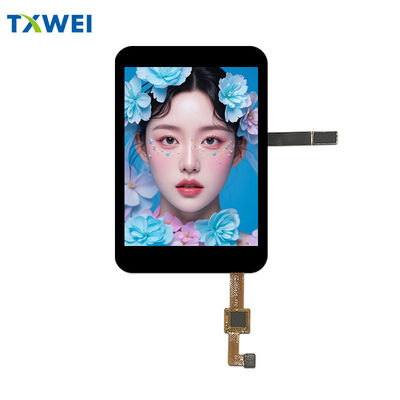
2.8 Inch 480x640 TFT LCD Display Module 1-Lane MIPI Capacitive Touch Panel 3.14mm Thin

2.8 Inch 480x640 TFT LCD Display Module 1-Lane MIPI Capacitive Touch Panel 3.14mm Thin

MOQ: 1 Piece (sample order accepted)
Price: Negotiable
Standard Packaging: Anti-static bag with shock-proof foam, export-grade corrugated carton
Delivery Period: 15-25 working days after sample approval
Payment Method: T/T,L/C,D/P
Supply Capacity: 10000 Pieces per Month
Detail Information
Place of Origin
Guangdong, China
Brand Name
TXWEI
Certification
CE, RoHS, FCC
Model Number
TXW280132B0-JZ
Display Size:
2.8 Inch (portrait)
Resolution:
480 X RGB X 640 Dots
LCD Type:
TFT Active Matrix, Normally Black, Transmissive
Pixel Arrangement:
RGB Vertical Stripe
Pixel Pitch:
0.09 X 0.09 Mm
Active Area:
43.20 X 57.60 Mm
LCM Size:
46.10 X 65.15 X 1.61 Mm
LCM With CTP Size:
49.65 X 72.95 X 3.14 Mm
Driver IC:
ST7701SN
Interface:
1-lane MIPI
Main FPC Connector:
24-pin, 0.3mm Pitch, OK-14M024-04
Touch FPC Connector:
10-pin, OK-14M010-04 (shipped Unfolded)
Viewing Direction:
All O'Clock
Color Depth:
16.7M Colors
Touch Structure:
G+F
Touch Driver IC:
CST826
Touch Interface:
I2C
Touch Type:
Single Touch With Gesture Recognition
Cover Glass Hardness:
>= 6H
Transmittance:
>= 85 Percent
Backlight:
6 White LEDs, IF 120mA, VF 2.9-3.3V
LED Life Time:
30000 Hours
LCD Supply Voltage:
2.6-3.3V
Touch Supply Voltage:
2.8V, IO 1.8V
Operating Temperature:
-20 To +70 C, <=90 Percent RH
Storage Temperature:
-30 To +80 C, <=90 Percent RH
Compliance:
RoHS
Highlight:

2.8 Inch MIPI TFT LCD

,

480x640 Capacitive Touch Panel

,

3.14mm Thin LCD Module

Product Description

TXW280132B0-JZ  —  2.8″ TFT / CTP  —  1-Lane MIPI

The Discipline of Subtraction

A 3.14 mm portrait display that removes a converter, two data lanes and one point of failure

Most display decisions in a compact device are made by addition. Add a driver board. Add a second flex for the touch layer. Add a boost converter because the backlight asked for eighteen volts. Add an aluminium bracket because the stack grew taller than the shell. Every addition is defensible on its own, and yet a device assembled entirely from defensible additions ends up heavier, thicker and more expensive than the product plan allowed. This module was drawn by a different instinct — not what can be included, but what can be taken away without the user ever noticing.

The result is a 2.8-inch portrait LCD, 480 by RGB by 640 dots, bonded to a glass-over-film touch panel and delivered as a single tested assembly 3.14 millimetres deep. Its backlight runs at 2.9 to 3.3 volts instead of the customary eighteen; its display talks over one MIPI lane instead of two; its sensor is film rather than a second sheet of glass. None of these are cost cuts. Each is an engineering argument, and the argument is the same one every time: in a handheld product, the millimetres you do not spend are the millimetres you can spend on the battery.

Thickness is not a dimension. It is a budget — and every supplier in the chain spends from it.

I.  One Lane Is an Interference Budget

A single-lane MIPI link carries the same 480 by 640 frame as a two-lane link, only with less copper crossing the hinge or the flex bend. On paper the difference is four conductors. Inside a working device it is a shorter return path, a smaller loop area and a quieter neighbour to the cellular modem that sits twelve millimetres away.

Interface
1-Lane MIPI
Driver
ST7701SN
Main FPC
24-pin, OK-14M024-04
Pin Pitch
0.3 mm

The controller is the ST7701SN, one of the most widely documented TFT drivers in the compact-display world. For a firmware team this is not a small mercy: reference code, timing tables and community answers already exist, and bring-up collapses from an investigation into an afternoon.

Table 01  ·  Interface and driver
ParameterSpecification
Resolution480 (RGB) x 640 dots
Interface1-lane MIPI
Driver ICST7701SN
Main FPC connector24-pin, 0.3 mm pitch, OK-14M024-04
Touch FPC connector10-pin, OK-14M010-04, shipped unfolded
Colour depth16.7M, RGB vertical stripe
Viewing directionAll O’Clock

Four fewer conductors. One less investigation.

II.  Glass Over Film, Chosen on Purpose

The touch stack is G+F: a sheet of chemically strengthened glass above a film sensor, bonded with optically clear adhesive. It is thinner than glass-over-glass and lighter, and it moves the optical interface further from the LCD, which is exactly what a portrait instrument with a recessed front panel wants. Hardness holds at 6H or better; transmittance stays at 85 percent or above.

Structure
G+F
Controller
CST826 / I2C
Input
Single touch + gesture
Hardness
≥ 6H
Transmittance
≥ 85%

Single touch with gesture recognition is a deliberate sufficiency. A dosing meter, a thermostat face, a portable reader — these are instruments answered with one finger. Multi-touch would add cost and a controller class the product does not need, and every unnecessary capability is a future failure mode with a purchase order attached.

Table 02  ·  Touch panel
ParameterSpecification
StructureG+F, OCA bonded
ControllerCST826 (COF), on-film
InterfaceI2C
InputSingle touch with gesture recognition
Supply / IO2.8 V / 1.8 V
Cover glassChemically strengthened, hardened
Surface hardness≥ 6H
Transmittance≥ 85%
Touch resolution480 x 640

Capability you do not ship is capability that cannot fail.

III.  A Ledger of Millimetres and Milliamps

The bare module measures 46.10 by 65.15 by 1.61 millimetres; bonded with its touch panel, 49.65 by 72.95 by 3.14. The active area is 43.20 by 57.60 millimetres at a 0.09 millimetre pixel pitch — a canvas shaped like a label rather than a video frame, which is what a vertical menu or a list of set-points actually needs.

LCM
46.10 x 65.15 x 1.61 mm
LCM + CTP
49.65 x 72.95 x 3.14 mm
Active Area
43.20 x 57.60 mm
Pixel Pitch
0.09 x 0.09 mm
Table 03  ·  Mechanical
ParameterSpecification
Active area43.20 x 57.60 mm
Pixel pitch0.09 x 0.09 mm
LCM outline46.10 x 65.15 x 1.61 mm
LCM with CTP49.65 x 72.95 x 3.14 mm
Lens outer dimension49.65 x 72.95 ± 0.05 mm
Lens visible area43.80 x 58.20 mm
FPC exitLCM FPC folded, CTP FPC unfolded

The backlight is where the arithmetic becomes visible. Six white LEDs run at 120 milliamps total with a forward voltage between 2.9 and 3.3 volts — a string that sits comfortably on a 3.3 volt rail and therefore needs no boost converter, no inductor, no switching noise beneath the panel. The LEDs are rated for 30,000 hours. Panel logic accepts 2.6 to 3.3 volts; the touch controller runs at 2.8 volts with 1.8 volt I/O.

Backlight
6 white LEDs, 120 mA
Forward Voltage
2.9 - 3.3 V
LED Life
30,000 hours

Environmental ratings read -20 to +70 degrees Celsius in operation and -30 to +80 in storage, below 90 percent relative humidity, with 96-hour high and low temperature cycling and ten thermal shock cycles performed in our reliability room. Materials and processing are lead free and RoHS compliant; CE, RoHS and FCC documentation travels with the shipment.

Table 04  ·  Electrical and environmental
ParameterSpecification
LCD supply voltage2.6 – 3.3 V
Backlight6 white LEDs, IF 120 mA
Forward voltage2.9 – 3.3 V
LED life time30,000 hours
Operating temperature-20 to +70 °C, ≤ 90% RH
Storage temperature-30 to +80 °C, ≤ 90% RH
Reliability96 h high / low temperature cycling, 10 thermal shocks
ComplianceRoHS, lead-free process; CE and FCC documents available

No boost converter beneath the glass — the quietest part of a display is the part that is not there.

IV.  What Happens After the Drawing

A module like this is rarely ordered from a catalogue; it is negotiated into a product. The useful conversation begins with three facts you already hold: the outline your enclosure allows, the viewing window your front panel permits, and the direction your flex must exit. From those we return a matched drawing, usually within one working day, frequently with two structures on the table — one optimised for the thinnest possible stack, one for the widest operating margin. Samples travel with the complete specification package, including the timing tables and the touch firmware notes, so that your laboratory validates the same part that will later arrive on a pallet.

For production we support changes that customers actually ask for: a modified FPC pinout, a brightness upgrade, cover glass printing in the colour of your front panel, adjustment of the touch window, and cable assembly. Quantities begin at a single unit for evaluation, pricing is quoted against an annual forecast, and production runs fifteen to twenty-five working days after sample approval. Payment terms are T/T, L/C or D/P; monthly capacity stands at ten thousand pieces with scheduling room beyond it. In a market where most suppliers sell what they have built, this is a conversation about what should be built — which is the only conversation worth having before tooling is committed.

Reference  ·  at a glance
Resolution  —  480 x RGB x 640
Size  —  2.8 inch, portrait
Interface  —  1-lane MIPI
Driver IC  —  ST7701SN
Touch  —  G+F, CST826, I2C
Color  —  16.7M, RGB stripe
Total thickness  —  3.14 mm
Operating temp.  —  -20 / +70 °C
Compliance  —  RoHS, CE, FCC

Send the outline, the window and the flex direction.

A matched drawing, a structure proposal and a quotation return within one working day. Sample units are available for validation before any commitment.

Model TXW280132B0-JZ  ·  Brand TXWEI  ·  Guangdong, China

Products
PRODUCTS DETAILS
2.8 Inch 480x640 TFT LCD Display Module 1-Lane MIPI Capacitive Touch Panel 3.14mm Thin
MOQ: 1 Piece (sample order accepted)
Price: Negotiable
Standard Packaging: Anti-static bag with shock-proof foam, export-grade corrugated carton
Delivery Period: 15-25 working days after sample approval
Payment Method: T/T,L/C,D/P
Supply Capacity: 10000 Pieces per Month
Detail Information
Place of Origin
Guangdong, China
Brand Name
TXWEI
Certification
CE, RoHS, FCC
Model Number
TXW280132B0-JZ
Display Size:
2.8 Inch (portrait)
Resolution:
480 X RGB X 640 Dots
LCD Type:
TFT Active Matrix, Normally Black, Transmissive
Pixel Arrangement:
RGB Vertical Stripe
Pixel Pitch:
0.09 X 0.09 Mm
Active Area:
43.20 X 57.60 Mm
LCM Size:
46.10 X 65.15 X 1.61 Mm
LCM With CTP Size:
49.65 X 72.95 X 3.14 Mm
Driver IC:
ST7701SN
Interface:
1-lane MIPI
Main FPC Connector:
24-pin, 0.3mm Pitch, OK-14M024-04
Touch FPC Connector:
10-pin, OK-14M010-04 (shipped Unfolded)
Viewing Direction:
All O'Clock
Color Depth:
16.7M Colors
Touch Structure:
G+F
Touch Driver IC:
CST826
Touch Interface:
I2C
Touch Type:
Single Touch With Gesture Recognition
Cover Glass Hardness:
>= 6H
Transmittance:
>= 85 Percent
Backlight:
6 White LEDs, IF 120mA, VF 2.9-3.3V
LED Life Time:
30000 Hours
LCD Supply Voltage:
2.6-3.3V
Touch Supply Voltage:
2.8V, IO 1.8V
Operating Temperature:
-20 To +70 C, <=90 Percent RH
Storage Temperature:
-30 To +80 C, <=90 Percent RH
Compliance:
RoHS
Minimum Order Quantity:
1 Piece (sample order accepted)
Price:
Negotiable
Packaging Details:
Anti-static bag with shock-proof foam, export-grade corrugated carton
Delivery Time:
15-25 working days after sample approval
Payment Terms:
T/T,L/C,D/P
Supply Ability:
10000 Pieces per Month
Highlight

2.8 Inch MIPI TFT LCD

,

480x640 Capacitive Touch Panel

,

3.14mm Thin LCD Module

Product Description

TXW280132B0-JZ  —  2.8″ TFT / CTP  —  1-Lane MIPI

The Discipline of Subtraction

A 3.14 mm portrait display that removes a converter, two data lanes and one point of failure

Most display decisions in a compact device are made by addition. Add a driver board. Add a second flex for the touch layer. Add a boost converter because the backlight asked for eighteen volts. Add an aluminium bracket because the stack grew taller than the shell. Every addition is defensible on its own, and yet a device assembled entirely from defensible additions ends up heavier, thicker and more expensive than the product plan allowed. This module was drawn by a different instinct — not what can be included, but what can be taken away without the user ever noticing.

The result is a 2.8-inch portrait LCD, 480 by RGB by 640 dots, bonded to a glass-over-film touch panel and delivered as a single tested assembly 3.14 millimetres deep. Its backlight runs at 2.9 to 3.3 volts instead of the customary eighteen; its display talks over one MIPI lane instead of two; its sensor is film rather than a second sheet of glass. None of these are cost cuts. Each is an engineering argument, and the argument is the same one every time: in a handheld product, the millimetres you do not spend are the millimetres you can spend on the battery.

Thickness is not a dimension. It is a budget — and every supplier in the chain spends from it.

I.  One Lane Is an Interference Budget

A single-lane MIPI link carries the same 480 by 640 frame as a two-lane link, only with less copper crossing the hinge or the flex bend. On paper the difference is four conductors. Inside a working device it is a shorter return path, a smaller loop area and a quieter neighbour to the cellular modem that sits twelve millimetres away.

Interface
1-Lane MIPI
Driver
ST7701SN
Main FPC
24-pin, OK-14M024-04
Pin Pitch
0.3 mm

The controller is the ST7701SN, one of the most widely documented TFT drivers in the compact-display world. For a firmware team this is not a small mercy: reference code, timing tables and community answers already exist, and bring-up collapses from an investigation into an afternoon.

Table 01  ·  Interface and driver
ParameterSpecification
Resolution480 (RGB) x 640 dots
Interface1-lane MIPI
Driver ICST7701SN
Main FPC connector24-pin, 0.3 mm pitch, OK-14M024-04
Touch FPC connector10-pin, OK-14M010-04, shipped unfolded
Colour depth16.7M, RGB vertical stripe
Viewing directionAll O’Clock

Four fewer conductors. One less investigation.

II.  Glass Over Film, Chosen on Purpose

The touch stack is G+F: a sheet of chemically strengthened glass above a film sensor, bonded with optically clear adhesive. It is thinner than glass-over-glass and lighter, and it moves the optical interface further from the LCD, which is exactly what a portrait instrument with a recessed front panel wants. Hardness holds at 6H or better; transmittance stays at 85 percent or above.

Structure
G+F
Controller
CST826 / I2C
Input
Single touch + gesture
Hardness
≥ 6H
Transmittance
≥ 85%

Single touch with gesture recognition is a deliberate sufficiency. A dosing meter, a thermostat face, a portable reader — these are instruments answered with one finger. Multi-touch would add cost and a controller class the product does not need, and every unnecessary capability is a future failure mode with a purchase order attached.

Table 02  ·  Touch panel
ParameterSpecification
StructureG+F, OCA bonded
ControllerCST826 (COF), on-film
InterfaceI2C
InputSingle touch with gesture recognition
Supply / IO2.8 V / 1.8 V
Cover glassChemically strengthened, hardened
Surface hardness≥ 6H
Transmittance≥ 85%
Touch resolution480 x 640

Capability you do not ship is capability that cannot fail.

III.  A Ledger of Millimetres and Milliamps

The bare module measures 46.10 by 65.15 by 1.61 millimetres; bonded with its touch panel, 49.65 by 72.95 by 3.14. The active area is 43.20 by 57.60 millimetres at a 0.09 millimetre pixel pitch — a canvas shaped like a label rather than a video frame, which is what a vertical menu or a list of set-points actually needs.

LCM
46.10 x 65.15 x 1.61 mm
LCM + CTP
49.65 x 72.95 x 3.14 mm
Active Area
43.20 x 57.60 mm
Pixel Pitch
0.09 x 0.09 mm
Table 03  ·  Mechanical
ParameterSpecification
Active area43.20 x 57.60 mm
Pixel pitch0.09 x 0.09 mm
LCM outline46.10 x 65.15 x 1.61 mm
LCM with CTP49.65 x 72.95 x 3.14 mm
Lens outer dimension49.65 x 72.95 ± 0.05 mm
Lens visible area43.80 x 58.20 mm
FPC exitLCM FPC folded, CTP FPC unfolded

The backlight is where the arithmetic becomes visible. Six white LEDs run at 120 milliamps total with a forward voltage between 2.9 and 3.3 volts — a string that sits comfortably on a 3.3 volt rail and therefore needs no boost converter, no inductor, no switching noise beneath the panel. The LEDs are rated for 30,000 hours. Panel logic accepts 2.6 to 3.3 volts; the touch controller runs at 2.8 volts with 1.8 volt I/O.

Backlight
6 white LEDs, 120 mA
Forward Voltage
2.9 - 3.3 V
LED Life
30,000 hours

Environmental ratings read -20 to +70 degrees Celsius in operation and -30 to +80 in storage, below 90 percent relative humidity, with 96-hour high and low temperature cycling and ten thermal shock cycles performed in our reliability room. Materials and processing are lead free and RoHS compliant; CE, RoHS and FCC documentation travels with the shipment.

Table 04  ·  Electrical and environmental
ParameterSpecification
LCD supply voltage2.6 – 3.3 V
Backlight6 white LEDs, IF 120 mA
Forward voltage2.9 – 3.3 V
LED life time30,000 hours
Operating temperature-20 to +70 °C, ≤ 90% RH
Storage temperature-30 to +80 °C, ≤ 90% RH
Reliability96 h high / low temperature cycling, 10 thermal shocks
ComplianceRoHS, lead-free process; CE and FCC documents available

No boost converter beneath the glass — the quietest part of a display is the part that is not there.

IV.  What Happens After the Drawing

A module like this is rarely ordered from a catalogue; it is negotiated into a product. The useful conversation begins with three facts you already hold: the outline your enclosure allows, the viewing window your front panel permits, and the direction your flex must exit. From those we return a matched drawing, usually within one working day, frequently with two structures on the table — one optimised for the thinnest possible stack, one for the widest operating margin. Samples travel with the complete specification package, including the timing tables and the touch firmware notes, so that your laboratory validates the same part that will later arrive on a pallet.

For production we support changes that customers actually ask for: a modified FPC pinout, a brightness upgrade, cover glass printing in the colour of your front panel, adjustment of the touch window, and cable assembly. Quantities begin at a single unit for evaluation, pricing is quoted against an annual forecast, and production runs fifteen to twenty-five working days after sample approval. Payment terms are T/T, L/C or D/P; monthly capacity stands at ten thousand pieces with scheduling room beyond it. In a market where most suppliers sell what they have built, this is a conversation about what should be built — which is the only conversation worth having before tooling is committed.

Reference  ·  at a glance
Resolution  —  480 x RGB x 640
Size  —  2.8 inch, portrait
Interface  —  1-lane MIPI
Driver IC  —  ST7701SN
Touch  —  G+F, CST826, I2C
Color  —  16.7M, RGB stripe
Total thickness  —  3.14 mm
Operating temp.  —  -20 / +70 °C
Compliance  —  RoHS, CE, FCC

Send the outline, the window and the flex direction.

A matched drawing, a structure proposal and a quotation return within one working day. Sample units are available for validation before any commitment.

Model TXW280132B0-JZ  ·  Brand TXWEI  ·  Guangdong, China

sitemap |  Privacy Policy | China Good Quality TFT LCD Display Supplier. Copyright © 2024-2026 Shenzhen Tianxianwei Technology Co., Ltd. . All Rights Reserved.