logo
Products
PRODUCTS DETAILS
Home > Products >
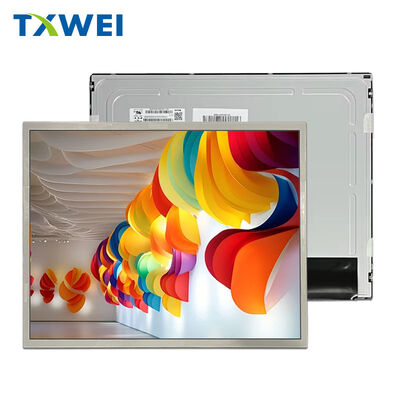
17 Inch 1280x1024 TFT LCD Display Module 250 nits Dual Channel LVDS 16.7M Colors

17 Inch 1280x1024 TFT LCD Display Module 250 nits Dual Channel LVDS 16.7M Colors

MOQ: Sample order accepted, 20 pcs
Price: Negotiable
Standard Packaging: Foam corners, edge protection, export carton
Delivery Period: 15-25 working days after sample approval
Payment Method: T/T,L/C,D/P
Supply Capacity: 5,000 pcs per month
Detail Information
Place of Origin
Guangdong, China
Brand Name
TXWEI
Certification
CE, RoHS, FCC
Model Number
TXW17S001B0
Size:
17 Inch
Resolution:
1280 X 1024 (SXGA)
Display Mode:
Normally Black, Transmissive
Pixel Pitch:
0.264 X 0.264 Mm
Active Area:
337.92 X 270.336 Mm
Outline Size:
358.5 X 296.5 X 7.7 Mm
Weight:
1670 G Typical
Bezel Width:
6/6/12/12 Mm
Interface:
LVDS, 2 Pixels Per Clock, Dual Channel, 30-pin
Clock Frequency:
54 MHz Typical, DE Only Mode
Colour Depth:
6-bit + FRC, 16.7 M Colours
Brightness:
250 Cd/m2 Typical, 200 Minimum
Viewing Angle:
85 Degrees Minimum All Directions
Surface:
Anti-glare, Haze 25%, 3H
Backlight:
48 White LEDs, 4 Strings Of 12, 34.8 V, 55 MA Per String
Power:
3 W Open Cell + 7.66 W Backlight, 10.66 W Total Typical
Logic Supply:
VDD 5.0 V, 600 MA Typical
Operating Temperature:
0 To +50 C
Storage Temperature:
-20 To +60 C
Mounting:
Landscape And Portrait
Highlight:

17 inch TFT LCD display module

,

1280x1024 LVDS LCD display

,

250 nits TFT LCD panel

Product Description
Operating Code  /  TXW17S001B0  /  17″ 1280 x 1024
Ten Hours of a Static Screen, and What Happens Next
A 17-inch SXGA panel is easy to buy and easy to ruin in a way no headline warns about. Six clauses, taken from the pages most suppliers never quote.
2 pixel/clock LVDS  ·  250 nits  ·  10.66 W  ·  48 LED / 4 strings  ·  0 to +50 °C

Every large LCD eventually meets the same failure, and it is not a dead pixel. It is a ghost — a menu bar, a clock, a logo that stayed in one place for a year and never fully left. Engineers call it image sticking, and this specification devotes a whole section to it because a control-room panel runs for a decade, not a warranty period. So this page is organised as operating conditions, not features.

01
Twenty hours is a limit, not a suggestion
Under twenty hours a day, and cycle static content out of frame for a few seconds every few minutes. A cell held at one voltage for months keeps a residual charge and remembers the image. Cheap fixes: subtle pixel shift, alternating background colours, a screen saver that is actually enabled. Design them in before shipping, not in year three.
02
Zero to fifty degrees, deliberately
0 to +50 °C operating, -20 to +60 storage, 10 to 80 percent humidity, no condensation. This is an indoor commercial panel: control room, bank lobby, station concourse, machine enclosure. For an unheated building, plan a heater or choose another module — discovering this at commissioning costs more than the panel.
03
250 nits plus 25 percent haze
Modest brightness with a matte, 3H surface is what keeps a 17-inch screen readable in a room with windows without turning it into a mirror. Chasing brightness means more LEDs, more heat and more power in an enclosure designed for ten watts. If the customer needs sunlight readability, the answer is a different product, not a dimmer setting.
04
Two pixels per clock, DE only
LVDS split into odd and even channels — RXO0 to RXO3 and RXE0 to RXE3 with separate clocks — 54 MHz at 60 Hz on a 30-pin link. Sync inputs have no effect: timing is defined by data enable alone, so the graphics stage needs no polarity tuning. The link tolerates plus or minus 3 percent spread-spectrum clocking, which matters when the same box carries a switching supply.
05
Ten watts, and where they land
3 W open cell, 7.66 W backlight, 10.66 W total. Forty-eight LEDs as four parallel strings of twelve at 34.8 V and 55 mA per string — a constant-current design with four sense returns, not a simple voltage rail. Practical consequences: the driver must survive one string going open, and the heat path is the bottom edge, so let it breathe.
06
Six bits plus FRC, no apology
6-bit source dithered to 16.7 M with IHADS driving, 85 degrees minimum in all four directions. On diagrams, text, trend curves and status colour at viewing distance, the gap to true 8-bit is invisible. On a colour-grading monitor it would not be. Buy the panel the job needs.
Why bother with a serial link? Four LVDS pairs replace roughly thirty CMOS traces. Fewer edges, lower EMI, and a cable that survives being routed past a motor drive — the reason industrial panels standardised on LVDS long before HDMI existed.

Power and thermal, on one page

Logic supply5.0 V, 600 mA typ (4.5 - 5.5 V, 1 A max)
Open cell / backlight3 W / 7.66 W — 10.66 W total
Backlight drive34.8 V, 55 mA per string, four sense returns
Mechanical358.5 x 296.5 x 7.7 mm, 1.67 kg, bezel 6/6/12/12
PanelAA 337.92 x 270.336 mm, pitch 0.264 mm

One detail worth asking about. The controller carries a built-in test pattern generator — black, white, red, green, blue, two seconds each, no host involved. On a line that is a ten-second incoming inspection; on a service call it separates a dead panel from a dead graphics card in one press. Logic must be stable before LED_EN is asserted, which is why the enable pin exists: sequence enforced in hardware, not trusted to firmware.

Six definitions worth knowing

SXGA
1280 x 1024, 5:4
A workstation standard from the early 1990s, not a consumer format. 1.31 million pixels on a 5:4 canvas — which is why hospital, machine-tool and dispatch systems are still drawn to it, and why a 16:9 panel cannot substitute without a layout rewrite.
LVDS 7:1
serialisation
Each differential pair carries seven bits per clock: six data plus one reserved. One pixel per clock needs three pairs plus clock; two pixels per clock needs six pairs, split into odd and even channels — hence RXO0-3 and RXE0-3 here. Signalling is EIA-644, roughly 350 mV differential, which is why the pair routing matters more than the wire count.
DE only
timing
Data enable alone defines the frame: horizontal and vertical sync are ignored. The host saves polarity and sync-width tuning, but DE must strictly honour the active windows — 640 clocks of horizontal active inside an 844-clock line, 1024 lines inside 1066 — or the image shifts instead of failing loudly.
6-bit + FRC
frame rate control
Each colour channel resolves 64 levels. FRC alternates between two adjacent levels frame by frame, and the eye integrates the average into a 256-level equivalent. The cost is a faint temporal dither: invisible on static content, occasionally visible on fast motion and small text.
IHADS
wide viewing
An in-plane switching family in which the field rotates liquid crystal molecules parallel to the glass instead of tilting them. Contrast holds past 85 degrees in every direction, which is what allows a 17-inch panel to be read from an angle at a dispatch desk.
Image sticking
physics
A net DC component across a cell pushes ionic impurities toward one electrode; the resulting internal field offsets the common voltage and leaves a faint copy of the image. That is why the specification forbids DC drive, why polarity inversion matters, and why cycling static content out of frame is maintenance rather than politeness.

Two numbers that get misread. 250 nits is comfortable in a 300 to 500 lux room and vanishes in 10,000 lux of direct sun — the figure is meaningless without the ambient it runs in. And 25 percent haze is not a defect: above roughly 20 percent, a matte surface converts mirror reflection into diffuse scatter, which is why a dimmer matte panel often reads better than a brighter glossy one.

Fit and misfit

Control rooms, bank and transit displays, kiosks, CNC and textile HMI, lab instrument clusters — anything drawn around 4:3 SXGA, in landscape or portrait, on one set of electronics. Not for outdoor enclosures, unheated buildings, or apps that hold a full white field at maximum brightness for years; that last one is the fastest route to a visible ghost. A 17-inch display is a ten-year decision, and the projects that fail are the ones where duty cycle and ambient were assumed rather than written down.

Qualification runs 240 hours per condition — storage at +60 and -20, operation at +60 and -5, damp heat at 50 °C and 80 percent, plus 100 thermal shock cycles. Samples ship with LVDS timing, power sequence and drawings; 15 to 25 working days after approval; storage life six months at 5 to 40 °C, away from light.

Tell us the duty cycle, not just the diagonal.

Hours per day, ambient temperature and whether the content is static decide more than any other three numbers. Drawing and quotation within one working day.

TXW17S001B0  ·  TXWEI  ·  Shenzhen, Guangdong, China  ·  RoHS compliant

Products
PRODUCTS DETAILS
17 Inch 1280x1024 TFT LCD Display Module 250 nits Dual Channel LVDS 16.7M Colors
MOQ: Sample order accepted, 20 pcs
Price: Negotiable
Standard Packaging: Foam corners, edge protection, export carton
Delivery Period: 15-25 working days after sample approval
Payment Method: T/T,L/C,D/P
Supply Capacity: 5,000 pcs per month
Detail Information
Place of Origin
Guangdong, China
Brand Name
TXWEI
Certification
CE, RoHS, FCC
Model Number
TXW17S001B0
Size:
17 Inch
Resolution:
1280 X 1024 (SXGA)
Display Mode:
Normally Black, Transmissive
Pixel Pitch:
0.264 X 0.264 Mm
Active Area:
337.92 X 270.336 Mm
Outline Size:
358.5 X 296.5 X 7.7 Mm
Weight:
1670 G Typical
Bezel Width:
6/6/12/12 Mm
Interface:
LVDS, 2 Pixels Per Clock, Dual Channel, 30-pin
Clock Frequency:
54 MHz Typical, DE Only Mode
Colour Depth:
6-bit + FRC, 16.7 M Colours
Brightness:
250 Cd/m2 Typical, 200 Minimum
Viewing Angle:
85 Degrees Minimum All Directions
Surface:
Anti-glare, Haze 25%, 3H
Backlight:
48 White LEDs, 4 Strings Of 12, 34.8 V, 55 MA Per String
Power:
3 W Open Cell + 7.66 W Backlight, 10.66 W Total Typical
Logic Supply:
VDD 5.0 V, 600 MA Typical
Operating Temperature:
0 To +50 C
Storage Temperature:
-20 To +60 C
Mounting:
Landscape And Portrait
Minimum Order Quantity:
Sample order accepted, 20 pcs
Price:
Negotiable
Packaging Details:
Foam corners, edge protection, export carton
Delivery Time:
15-25 working days after sample approval
Payment Terms:
T/T,L/C,D/P
Supply Ability:
5,000 pcs per month
Highlight

17 inch TFT LCD display module

,

1280x1024 LVDS LCD display

,

250 nits TFT LCD panel

Product Description
Operating Code  /  TXW17S001B0  /  17″ 1280 x 1024
Ten Hours of a Static Screen, and What Happens Next
A 17-inch SXGA panel is easy to buy and easy to ruin in a way no headline warns about. Six clauses, taken from the pages most suppliers never quote.
2 pixel/clock LVDS  ·  250 nits  ·  10.66 W  ·  48 LED / 4 strings  ·  0 to +50 °C

Every large LCD eventually meets the same failure, and it is not a dead pixel. It is a ghost — a menu bar, a clock, a logo that stayed in one place for a year and never fully left. Engineers call it image sticking, and this specification devotes a whole section to it because a control-room panel runs for a decade, not a warranty period. So this page is organised as operating conditions, not features.

01
Twenty hours is a limit, not a suggestion
Under twenty hours a day, and cycle static content out of frame for a few seconds every few minutes. A cell held at one voltage for months keeps a residual charge and remembers the image. Cheap fixes: subtle pixel shift, alternating background colours, a screen saver that is actually enabled. Design them in before shipping, not in year three.
02
Zero to fifty degrees, deliberately
0 to +50 °C operating, -20 to +60 storage, 10 to 80 percent humidity, no condensation. This is an indoor commercial panel: control room, bank lobby, station concourse, machine enclosure. For an unheated building, plan a heater or choose another module — discovering this at commissioning costs more than the panel.
03
250 nits plus 25 percent haze
Modest brightness with a matte, 3H surface is what keeps a 17-inch screen readable in a room with windows without turning it into a mirror. Chasing brightness means more LEDs, more heat and more power in an enclosure designed for ten watts. If the customer needs sunlight readability, the answer is a different product, not a dimmer setting.
04
Two pixels per clock, DE only
LVDS split into odd and even channels — RXO0 to RXO3 and RXE0 to RXE3 with separate clocks — 54 MHz at 60 Hz on a 30-pin link. Sync inputs have no effect: timing is defined by data enable alone, so the graphics stage needs no polarity tuning. The link tolerates plus or minus 3 percent spread-spectrum clocking, which matters when the same box carries a switching supply.
05
Ten watts, and where they land
3 W open cell, 7.66 W backlight, 10.66 W total. Forty-eight LEDs as four parallel strings of twelve at 34.8 V and 55 mA per string — a constant-current design with four sense returns, not a simple voltage rail. Practical consequences: the driver must survive one string going open, and the heat path is the bottom edge, so let it breathe.
06
Six bits plus FRC, no apology
6-bit source dithered to 16.7 M with IHADS driving, 85 degrees minimum in all four directions. On diagrams, text, trend curves and status colour at viewing distance, the gap to true 8-bit is invisible. On a colour-grading monitor it would not be. Buy the panel the job needs.
Why bother with a serial link? Four LVDS pairs replace roughly thirty CMOS traces. Fewer edges, lower EMI, and a cable that survives being routed past a motor drive — the reason industrial panels standardised on LVDS long before HDMI existed.

Power and thermal, on one page

Logic supply5.0 V, 600 mA typ (4.5 - 5.5 V, 1 A max)
Open cell / backlight3 W / 7.66 W — 10.66 W total
Backlight drive34.8 V, 55 mA per string, four sense returns
Mechanical358.5 x 296.5 x 7.7 mm, 1.67 kg, bezel 6/6/12/12
PanelAA 337.92 x 270.336 mm, pitch 0.264 mm

One detail worth asking about. The controller carries a built-in test pattern generator — black, white, red, green, blue, two seconds each, no host involved. On a line that is a ten-second incoming inspection; on a service call it separates a dead panel from a dead graphics card in one press. Logic must be stable before LED_EN is asserted, which is why the enable pin exists: sequence enforced in hardware, not trusted to firmware.

Six definitions worth knowing

SXGA
1280 x 1024, 5:4
A workstation standard from the early 1990s, not a consumer format. 1.31 million pixels on a 5:4 canvas — which is why hospital, machine-tool and dispatch systems are still drawn to it, and why a 16:9 panel cannot substitute without a layout rewrite.
LVDS 7:1
serialisation
Each differential pair carries seven bits per clock: six data plus one reserved. One pixel per clock needs three pairs plus clock; two pixels per clock needs six pairs, split into odd and even channels — hence RXO0-3 and RXE0-3 here. Signalling is EIA-644, roughly 350 mV differential, which is why the pair routing matters more than the wire count.
DE only
timing
Data enable alone defines the frame: horizontal and vertical sync are ignored. The host saves polarity and sync-width tuning, but DE must strictly honour the active windows — 640 clocks of horizontal active inside an 844-clock line, 1024 lines inside 1066 — or the image shifts instead of failing loudly.
6-bit + FRC
frame rate control
Each colour channel resolves 64 levels. FRC alternates between two adjacent levels frame by frame, and the eye integrates the average into a 256-level equivalent. The cost is a faint temporal dither: invisible on static content, occasionally visible on fast motion and small text.
IHADS
wide viewing
An in-plane switching family in which the field rotates liquid crystal molecules parallel to the glass instead of tilting them. Contrast holds past 85 degrees in every direction, which is what allows a 17-inch panel to be read from an angle at a dispatch desk.
Image sticking
physics
A net DC component across a cell pushes ionic impurities toward one electrode; the resulting internal field offsets the common voltage and leaves a faint copy of the image. That is why the specification forbids DC drive, why polarity inversion matters, and why cycling static content out of frame is maintenance rather than politeness.

Two numbers that get misread. 250 nits is comfortable in a 300 to 500 lux room and vanishes in 10,000 lux of direct sun — the figure is meaningless without the ambient it runs in. And 25 percent haze is not a defect: above roughly 20 percent, a matte surface converts mirror reflection into diffuse scatter, which is why a dimmer matte panel often reads better than a brighter glossy one.

Fit and misfit

Control rooms, bank and transit displays, kiosks, CNC and textile HMI, lab instrument clusters — anything drawn around 4:3 SXGA, in landscape or portrait, on one set of electronics. Not for outdoor enclosures, unheated buildings, or apps that hold a full white field at maximum brightness for years; that last one is the fastest route to a visible ghost. A 17-inch display is a ten-year decision, and the projects that fail are the ones where duty cycle and ambient were assumed rather than written down.

Qualification runs 240 hours per condition — storage at +60 and -20, operation at +60 and -5, damp heat at 50 °C and 80 percent, plus 100 thermal shock cycles. Samples ship with LVDS timing, power sequence and drawings; 15 to 25 working days after approval; storage life six months at 5 to 40 °C, away from light.

Tell us the duty cycle, not just the diagonal.

Hours per day, ambient temperature and whether the content is static decide more than any other three numbers. Drawing and quotation within one working day.

TXW17S001B0  ·  TXWEI  ·  Shenzhen, Guangdong, China  ·  RoHS compliant

sitemap |  Privacy Policy | China Good Quality TFT LCD Display Supplier. Copyright © 2024-2026 Shenzhen Tianxianwei Technology Co., Ltd. . All Rights Reserved.