logo
Products
PRODUCTS DETAILS
Home > Products >
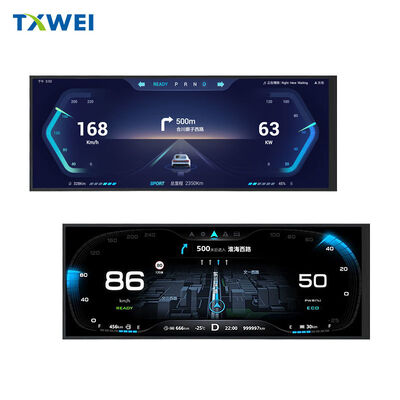
9.3 Inch 600x1600 Bar Type TFT LCD Display MIPI Interface 700nits Wide Temperature Strip Panel

9.3 Inch 600x1600 Bar Type TFT LCD Display MIPI Interface 700nits Wide Temperature Strip Panel

MOQ: 10 Pieces
Price: Negotiable by specification and volume
Standard Packaging: Anti-static tray with protective film, ESD bag, shock-proof foam, export-grade corrugated carton
Delivery Period: 3-5 working days for stock, 20-25 days for mass production
Payment Method: T/T
Supply Capacity: 5000 Pieces per Month
Detail Information
Place of Origin
Shenzhen, Guangdong, China
Brand Name
TXW
Certification
RoHS
Model Number
TXW930001B1
Screen Size:
9.3 Inch
Resolution:
600 X RGB X 1600 Dots
Panel Type:
Transmissive, Normally Black, All Clock Viewing
Active Area:
221.18 X 82.94 Mm
Pixel Pitch:
0.138 X 0.138 Mm
Brightness:
700 Cd/m2 Typ, 850 Cd/m2 Max
Uniformity:
70% Min
Display Interface:
MIPI DSI, 4 Data Pairs + Clock
Logic Supply:
3.3V
Backlight:
18 White LEDs, IF 150mA Typ / 210mA Max, VF 18-21V
Bezel Opening:
222.98 X 84.74 Mm
Outline Size:
231.00 X 89.00 X 7.30 Mm
Control Pins:
STBYB Standby, RSTB Reset Active Low
Operating Temperature:
-30 To +85 DegC
Storage Temperature:
-30 To +85 DegC
Compliance:
RoHS, Lead-free
Highlight:

9.3 inch bar type TFT LCD

,

600x1600 MIPI interface LCD panel

,

700nits wide temperature strip display

Product Description
Technology shift · information displays From dot-matrix to a 9.3 inch bar TFT: what actually changes when an information strip goes full colour

600 × 1600 pixels at 0.138 mm pitch, 700 cd/m², MIPI input, −30 to +85 °C. Replacing an LED matrix or a character LCD is not a swap of one part — it changes the content model, the power budget and the firmware team's job.

Walk along a warehouse aisle or a station platform and most information strips are still built from one of three older technologies: an LED dot matrix, a segmented or character LCD, or a tiled arrangement of small panels. Each was the right answer when it was designed, and each is now being replaced by bar-shaped TFT panels for a reason that has little to do with the display itself and everything to do with what a product is now expected to show.

This 9.3 inch module is a clean example of the new generation: a single piece of glass 221.18 mm wide with 1600 pixels across it, full colour, one MIPI link, and a rated range of −30 to +85 °C. Understanding the migration means understanding what each earlier technology could not do.

Generation one: LED dot matrix
1980s – presentBright, rugged, and permanently low resolution

A dot matrix is a grid of discrete LEDs driven by row and column scanning. It is genuinely bright — thousands of nits per LED — visible in direct sun, and mechanically simple enough to survive decades outdoors.

Its limits are structural. Resolution is measured in tens of pixels, so text is blocky and only one or two colours exist per module. Multi-language content, prices with currency symbols, or anything resembling an icon set is out of reach. Power consumption scales with the number of lit LEDs, and a full-white panel draws heavily.

Generation two: segmented and character LCD
1990s – presentLow power, fixed layouts, slow in the cold

Character LCDs and seven-segment displays trade flexibility for efficiency. They draw almost nothing, work on a coin cell for years, and are cheap in volume. A price rail built on segmented LCD has a ten-year battery life and no firmware beyond a lookup table.

The constraint is the content. Segments are printed in fixed shapes: you cannot add a currency, change language, or draw an icon without new glass. Response time degrades sharply at low temperature — the very conditions where a rail beside a loading door operates — and colour is limited to what a monochrome or dichroic film provides.

Generation three: tiled small panels
2010s – presentColour arrives, with a seam in the middle

Stitching 3.5 or 5 inch modules into a longer strip brought full colour and video to signage. It also brought bezels between panels, separate backlights binned at different colour temperatures, and one host link per tile.

The result works at viewing distances measured in metres. At fifty centimetres, where a shelf rail or a machine readout is actually read, the seams are the first thing a customer notices, and the colour difference between tiles is the second.

A bar panel does not compete with an LED matrix on brightness. It competes on what the strip is allowed to say.
Generation four: native bar TFT

A bar panel is glass made at the shape it ships in. Here that shape is 221.18 by 82.94 mm of active area with 600 × 1600 pixels at a square 0.138 mm pitch, a 231.00 × 89.00 × 7.30 mm outline, and one MIPI DSI link with four data pairs plus a clock.

What changes is not just colour. Content becomes dynamic and language-independent: a price rail can switch currency or script, a platform display can show a diagram as well as text, a machine readout can draw a trend line. Uniformity, at 70% minimum, is lower than a square panel because a long narrow light guide has to push light further from its LEDs — honest, and invisible for text.

The trade that is easy to miss

An LED matrix in direct sunlight will always beat a 700 cd/m² TFT with a 70% uniformity floor. If the strip is outdoors facing the sky, TFT is the wrong direction and the older technology wins. If the strip is under cover — a sheltered platform, an indoor aisle, a machine front — the TFT gives you ten times the information density for a fraction of the power per lit pixel.

Comparison, honestly stated
LED dot matrixCharacter LCDTiled panelsNative bar TFT
ResolutionTens of pixelsFixed segmentsHigh per tile1600 × 600
Colour1–2 coloursMonochromeFullFull, 16.7 M
SunlightExcellentPoorModerateIndoor (700 nits)
SeamsNoneNoneVisibleNone
PowerHigh when litVery lowModerate per tile18 LEDs, 150 mA typ
Cold performanceGoodSlowModerateRated −30 °C
Content changesFirmwareNew glassFirmwareAny frame
The electrical reality of the migration

A bar TFT is not a drop-in replacement for a matrix. It needs a MIPI DSI host, a 3.3 V logic rail, and a separate 18–21 V boost converter for eighteen white LEDs at 150 mA typical and 210 mA maximum. Two control pins matter at bring-up: STBYB must be driven active for the timing controller and source driver to run, and RSTB is active low.

That last detail explains most first-power failures. A strip that stays black on the bench is usually a floating standby pin or a reset released in the wrong order, not a dead panel. A migration plan that includes a documented power sequence saves a week of debugging.

Optical behaviour worth designing around

Brightness is 700 cd/m² typical and 850 maximum, with 70% minimum uniformity and all-clock viewing. On a 221 mm strip, the uniformity figure is a gradient along the length rather than a patch: the end nearest the LEDs is brighter. For text, prices and icons nobody notices. For full-bleed photography it is visible, and the fix is either a shorter strip, a different light guide, or content designed with a margin rather than a full-width image.

Viewing angle matters more than on a square panel because a strip is rarely viewed from the centre. It sits above eye level on a rack front, below it on a shelf rail, and is read from an angle as the viewer walks past. All-clock viewing is what makes that usable.

What the temperature rating is really for

−30 to +85 °C for both operation and storage is the specification that separates this panel from a catalogue part chosen for its size. It covers a rail beside a door that opens to a winter street, a cabinet with no ventilation in a summer warehouse, and a machine front in a hall that is cold before the shift starts and hot by mid-afternoon.

The mechanism is not just the liquid crystal mixture. Polariser reliability, sealant flexibility, and the backlight's ability to strike at low temperature all have to hold, and the LED forward voltage climbs as temperature falls — which is why the boost converter needs headroom, not just the panel.

Migration checklist
  • Host interface: confirm a MIPI DSI controller, four lanes available or reducible
  • Power: add a 18–21 V rail with 210 mA peak capability and thermal budget
  • Content: move from fixed segments to a frame buffer and a rendering path
  • Mechanical: reserve 231.00 × 89.00 × 7.30 mm, aperture 222.98 × 84.74 mm
  • Thermal: metal extrusion and a pad behind the light guide, not foam
  • Service: one part number instead of a panel, a mask and a synchronisation layer
  • Life: 700 nits indoor, and treat 850 as headroom rather than a target
The strip is now a screen, and a screen needs a content plan

Moving from dot-matrix to TFT is a change of platform, not a part substitution. The teams that plan the interface, the power rail and the content model together get a strip that lasts a decade; the teams that treat it as a panel swap rediscover the same three problems at the first sample.

Figures from the TXW930001B1 drawing dated 2026-03-21. Driver IC listed as TBD; contrast ratio, response time and colour gamut are released with the quotation.

Products
PRODUCTS DETAILS
9.3 Inch 600x1600 Bar Type TFT LCD Display MIPI Interface 700nits Wide Temperature Strip Panel
MOQ: 10 Pieces
Price: Negotiable by specification and volume
Standard Packaging: Anti-static tray with protective film, ESD bag, shock-proof foam, export-grade corrugated carton
Delivery Period: 3-5 working days for stock, 20-25 days for mass production
Payment Method: T/T
Supply Capacity: 5000 Pieces per Month
Detail Information
Place of Origin
Shenzhen, Guangdong, China
Brand Name
TXW
Certification
RoHS
Model Number
TXW930001B1
Screen Size:
9.3 Inch
Resolution:
600 X RGB X 1600 Dots
Panel Type:
Transmissive, Normally Black, All Clock Viewing
Active Area:
221.18 X 82.94 Mm
Pixel Pitch:
0.138 X 0.138 Mm
Brightness:
700 Cd/m2 Typ, 850 Cd/m2 Max
Uniformity:
70% Min
Display Interface:
MIPI DSI, 4 Data Pairs + Clock
Logic Supply:
3.3V
Backlight:
18 White LEDs, IF 150mA Typ / 210mA Max, VF 18-21V
Bezel Opening:
222.98 X 84.74 Mm
Outline Size:
231.00 X 89.00 X 7.30 Mm
Control Pins:
STBYB Standby, RSTB Reset Active Low
Operating Temperature:
-30 To +85 DegC
Storage Temperature:
-30 To +85 DegC
Compliance:
RoHS, Lead-free
Minimum Order Quantity:
10 Pieces
Price:
Negotiable by specification and volume
Packaging Details:
Anti-static tray with protective film, ESD bag, shock-proof foam, export-grade corrugated carton
Delivery Time:
3-5 working days for stock, 20-25 days for mass production
Payment Terms:
T/T
Supply Ability:
5000 Pieces per Month
Highlight

9.3 inch bar type TFT LCD

,

600x1600 MIPI interface LCD panel

,

700nits wide temperature strip display

Product Description
Technology shift · information displays From dot-matrix to a 9.3 inch bar TFT: what actually changes when an information strip goes full colour

600 × 1600 pixels at 0.138 mm pitch, 700 cd/m², MIPI input, −30 to +85 °C. Replacing an LED matrix or a character LCD is not a swap of one part — it changes the content model, the power budget and the firmware team's job.

Walk along a warehouse aisle or a station platform and most information strips are still built from one of three older technologies: an LED dot matrix, a segmented or character LCD, or a tiled arrangement of small panels. Each was the right answer when it was designed, and each is now being replaced by bar-shaped TFT panels for a reason that has little to do with the display itself and everything to do with what a product is now expected to show.

This 9.3 inch module is a clean example of the new generation: a single piece of glass 221.18 mm wide with 1600 pixels across it, full colour, one MIPI link, and a rated range of −30 to +85 °C. Understanding the migration means understanding what each earlier technology could not do.

Generation one: LED dot matrix
1980s – presentBright, rugged, and permanently low resolution

A dot matrix is a grid of discrete LEDs driven by row and column scanning. It is genuinely bright — thousands of nits per LED — visible in direct sun, and mechanically simple enough to survive decades outdoors.

Its limits are structural. Resolution is measured in tens of pixels, so text is blocky and only one or two colours exist per module. Multi-language content, prices with currency symbols, or anything resembling an icon set is out of reach. Power consumption scales with the number of lit LEDs, and a full-white panel draws heavily.

Generation two: segmented and character LCD
1990s – presentLow power, fixed layouts, slow in the cold

Character LCDs and seven-segment displays trade flexibility for efficiency. They draw almost nothing, work on a coin cell for years, and are cheap in volume. A price rail built on segmented LCD has a ten-year battery life and no firmware beyond a lookup table.

The constraint is the content. Segments are printed in fixed shapes: you cannot add a currency, change language, or draw an icon without new glass. Response time degrades sharply at low temperature — the very conditions where a rail beside a loading door operates — and colour is limited to what a monochrome or dichroic film provides.

Generation three: tiled small panels
2010s – presentColour arrives, with a seam in the middle

Stitching 3.5 or 5 inch modules into a longer strip brought full colour and video to signage. It also brought bezels between panels, separate backlights binned at different colour temperatures, and one host link per tile.

The result works at viewing distances measured in metres. At fifty centimetres, where a shelf rail or a machine readout is actually read, the seams are the first thing a customer notices, and the colour difference between tiles is the second.

A bar panel does not compete with an LED matrix on brightness. It competes on what the strip is allowed to say.
Generation four: native bar TFT

A bar panel is glass made at the shape it ships in. Here that shape is 221.18 by 82.94 mm of active area with 600 × 1600 pixels at a square 0.138 mm pitch, a 231.00 × 89.00 × 7.30 mm outline, and one MIPI DSI link with four data pairs plus a clock.

What changes is not just colour. Content becomes dynamic and language-independent: a price rail can switch currency or script, a platform display can show a diagram as well as text, a machine readout can draw a trend line. Uniformity, at 70% minimum, is lower than a square panel because a long narrow light guide has to push light further from its LEDs — honest, and invisible for text.

The trade that is easy to miss

An LED matrix in direct sunlight will always beat a 700 cd/m² TFT with a 70% uniformity floor. If the strip is outdoors facing the sky, TFT is the wrong direction and the older technology wins. If the strip is under cover — a sheltered platform, an indoor aisle, a machine front — the TFT gives you ten times the information density for a fraction of the power per lit pixel.

Comparison, honestly stated
LED dot matrixCharacter LCDTiled panelsNative bar TFT
ResolutionTens of pixelsFixed segmentsHigh per tile1600 × 600
Colour1–2 coloursMonochromeFullFull, 16.7 M
SunlightExcellentPoorModerateIndoor (700 nits)
SeamsNoneNoneVisibleNone
PowerHigh when litVery lowModerate per tile18 LEDs, 150 mA typ
Cold performanceGoodSlowModerateRated −30 °C
Content changesFirmwareNew glassFirmwareAny frame
The electrical reality of the migration

A bar TFT is not a drop-in replacement for a matrix. It needs a MIPI DSI host, a 3.3 V logic rail, and a separate 18–21 V boost converter for eighteen white LEDs at 150 mA typical and 210 mA maximum. Two control pins matter at bring-up: STBYB must be driven active for the timing controller and source driver to run, and RSTB is active low.

That last detail explains most first-power failures. A strip that stays black on the bench is usually a floating standby pin or a reset released in the wrong order, not a dead panel. A migration plan that includes a documented power sequence saves a week of debugging.

Optical behaviour worth designing around

Brightness is 700 cd/m² typical and 850 maximum, with 70% minimum uniformity and all-clock viewing. On a 221 mm strip, the uniformity figure is a gradient along the length rather than a patch: the end nearest the LEDs is brighter. For text, prices and icons nobody notices. For full-bleed photography it is visible, and the fix is either a shorter strip, a different light guide, or content designed with a margin rather than a full-width image.

Viewing angle matters more than on a square panel because a strip is rarely viewed from the centre. It sits above eye level on a rack front, below it on a shelf rail, and is read from an angle as the viewer walks past. All-clock viewing is what makes that usable.

What the temperature rating is really for

−30 to +85 °C for both operation and storage is the specification that separates this panel from a catalogue part chosen for its size. It covers a rail beside a door that opens to a winter street, a cabinet with no ventilation in a summer warehouse, and a machine front in a hall that is cold before the shift starts and hot by mid-afternoon.

The mechanism is not just the liquid crystal mixture. Polariser reliability, sealant flexibility, and the backlight's ability to strike at low temperature all have to hold, and the LED forward voltage climbs as temperature falls — which is why the boost converter needs headroom, not just the panel.

Migration checklist
  • Host interface: confirm a MIPI DSI controller, four lanes available or reducible
  • Power: add a 18–21 V rail with 210 mA peak capability and thermal budget
  • Content: move from fixed segments to a frame buffer and a rendering path
  • Mechanical: reserve 231.00 × 89.00 × 7.30 mm, aperture 222.98 × 84.74 mm
  • Thermal: metal extrusion and a pad behind the light guide, not foam
  • Service: one part number instead of a panel, a mask and a synchronisation layer
  • Life: 700 nits indoor, and treat 850 as headroom rather than a target
The strip is now a screen, and a screen needs a content plan

Moving from dot-matrix to TFT is a change of platform, not a part substitution. The teams that plan the interface, the power rail and the content model together get a strip that lasts a decade; the teams that treat it as a panel swap rediscover the same three problems at the first sample.

Figures from the TXW930001B1 drawing dated 2026-03-21. Driver IC listed as TBD; contrast ratio, response time and colour gamut are released with the quotation.

sitemap |  Privacy Policy | China Good Quality TFT LCD Display Supplier. Copyright © 2024-2026 Shenzhen Tianxianwei Technology Co., Ltd. . All Rights Reserved.